


What's New
Stay up-to-date with the latest updates to Yutori's products.
Try Navigator n1.5 on your tasks, no code or signup required
You can now run your own prompts with our latest model, Navigator n1.5, in a cloud browser.
As we've shared before, Navigator n1.5 is the most capable computer use model for the web, state-of-the-art on accuracy, latency, and cost across benchmarks.
But benchmarks only tell part of the story — many are outdated or hard to trust. The best way to build intuition for what Navigator can do is to try it on a task you actually care about. You could already do that via our API. Now you can do it in the browser, without having to sign up or write a single line of code.
Sessions are capped at 5 minutes.
Navigator n1.5 solves Online-Mind2Web with 97.3% success
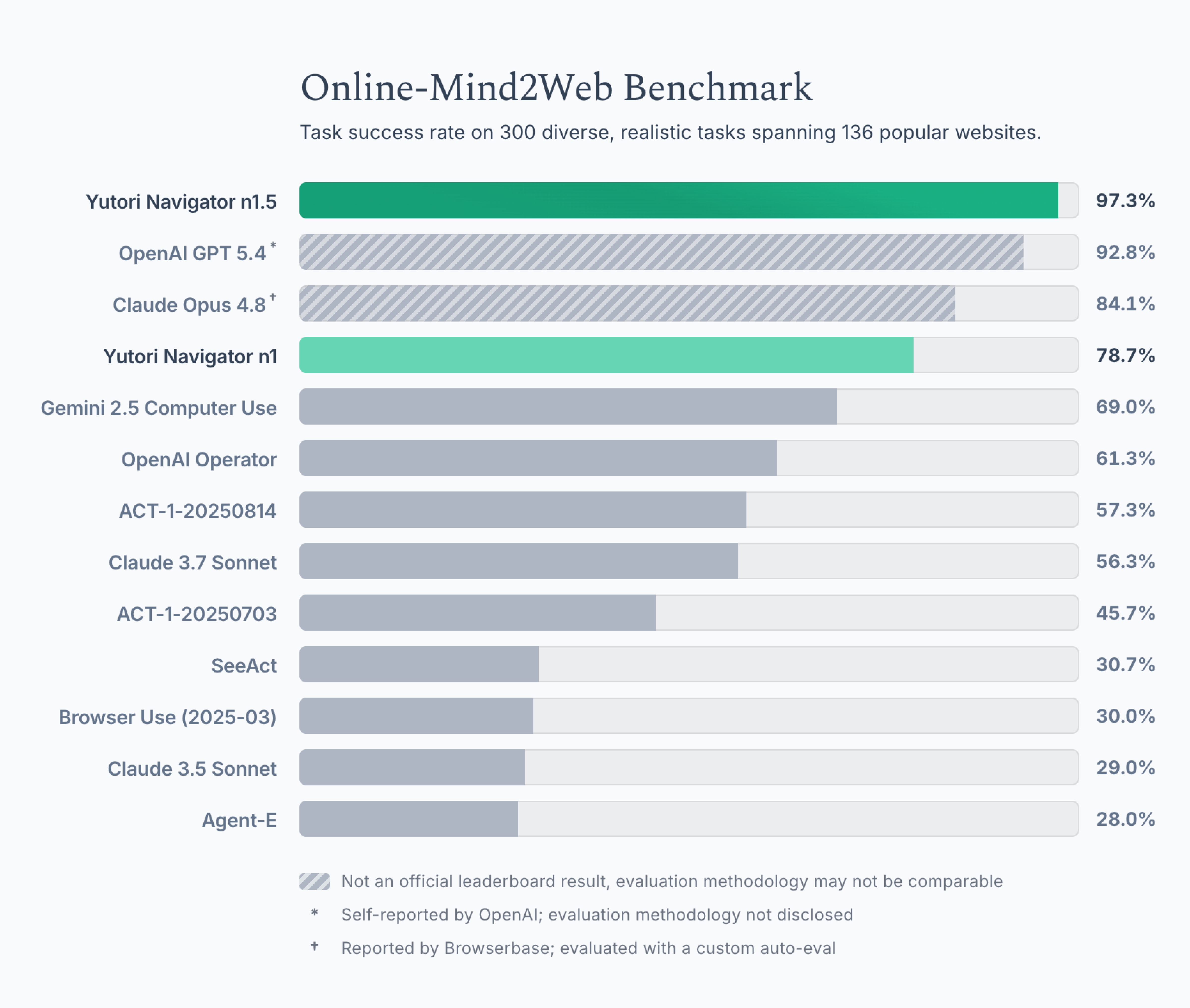
Navigator n1.5 achieved a 97.3% human-verified success rate on Online-Mind2Web, a benchmark of 300 real-world tasks across 136 popular websites.
The result was independently evaluated by the OSU NLP Group and Careerflow Human Data Labs, with three independent reviews, additional quality assurance on borderline cases, and final manual verification by the benchmark authors.
Just one year ago, state-of-the-art performance on Online-Mind2Web was around 40%. At 97.3%, Navigator n1.5 has effectively saturated the benchmark.
Read the announcement →
View the official leaderboard →
Try n1.5 on the Yutori API →
Navigator n1.5 — the most capable computer use model for the web

We're releasing Navigator n1.5, our next-generation computer use model for the web.
Expanded action space
n1 controlled the browser through human-like keyboard and mouse actions (click, type, scroll). n1.5 expands the action space to operate directly on the DOM through JavaScript — combining the generality of vision with the efficiency of programmatic access.
Multi-page form filling that used to take ~2 minutes now completes in a single step. Dense extraction tasks that took 22 steps now take 5. See example demos.
State-of-the-art across the board
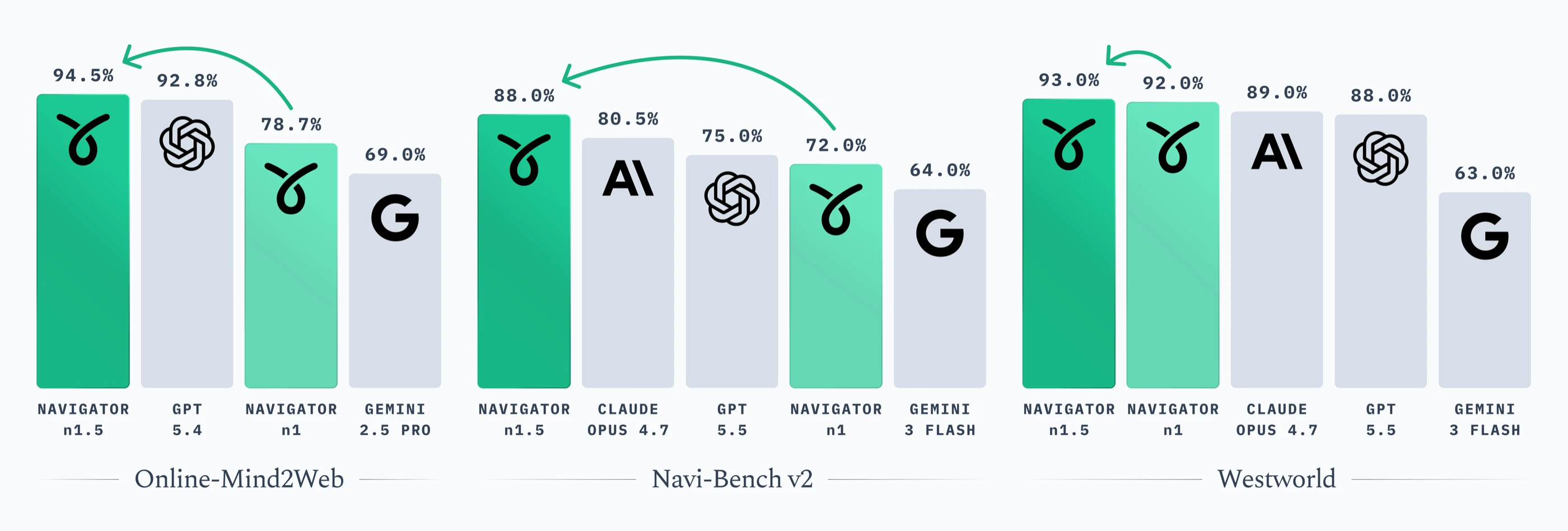
- 97.3% on Online-Mind2Web — human evaluation, independently verified by OSU-NLP + Careerflow (our initial internal launch measurement was 94.5%; next-best official-board model: Gemini 2.5 Computer Use at 69.0%).
- 88.0% on Navi-Bench v2, our expanded benchmark with new domains like Redfin, Zillow, Gymshark, Trip, and Allbirds (vs. Claude Opus 4.7 at 80.5%, GPT-5.5 at 75.0%, Gemini 3 Flash at 64.0%).
- 93.0% on Westworld (vs. Claude Opus 4.7 at 89.0%, GPT-5.5 at 88.0%).
Introducing Yutori Delegate
Meet Yutori Delegate — an agent you hand work off to, and move on with your life.
Delegate runs across the web and apps where you work. It can browse and navigate websites, research, draft replies, fill forms, build slide decks and dashboards, and connect to authenticated websites and tools like Gmail, Slack, Notion, Linear, GitHub, and more. It can manage one-off as well as recurring tasks. No code, no babysitting needed.
We've shipped tailored experiences for the people who feel the cost of context-switching most:
- Founders — outsource the compounding busywork and focus on building your company
- Sales — research accounts, draft outreach, keep CRM clean
- Recruiters — sourcing, outreach, scheduling on autopilot
- VCs — diligence, market mapping, founder research
Enterprise-ready by default
SOC 2 Type II certified, CASA Tier 2 (Google-verified), enterprise-grade access controls, and your data is never used for training. There's a briefing for IT and security reviewers with the details.
Yutori Local, Connectors, Live Artifacts, etc.
The biggest update to Scouts since we launched!
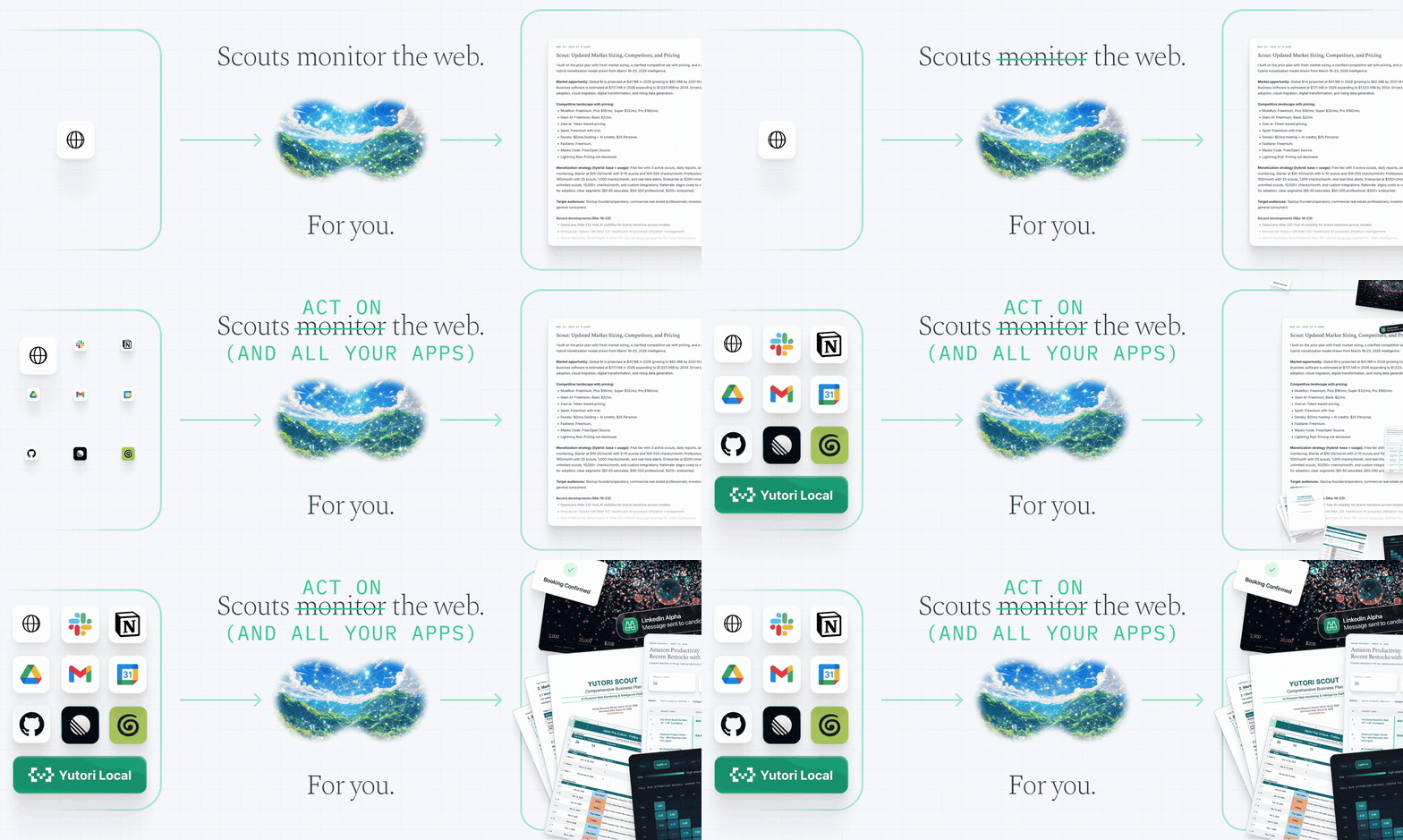
Scouts now goes beyond the public web — you can log it into any authenticated website, and it can connect to apps like Gmail, Slack, Notion, and more. And it's not just monitoring anymore; it's a general-purpose task execution engine for the web.
Just describe what needs to happen. Connect the right apps and websites. Your Scout handles it. One-off or recurring. Book a reservation, file an expense, monitor a page and reply when something changes. No code, no setup.
Yutori Local
You can now securely log agents in to any website to complete tasks on your behalf, without credentials ever leaving your device. Book, buy, reserve, reply — if you can do it in a browser, your agent can too.
Live Artifacts
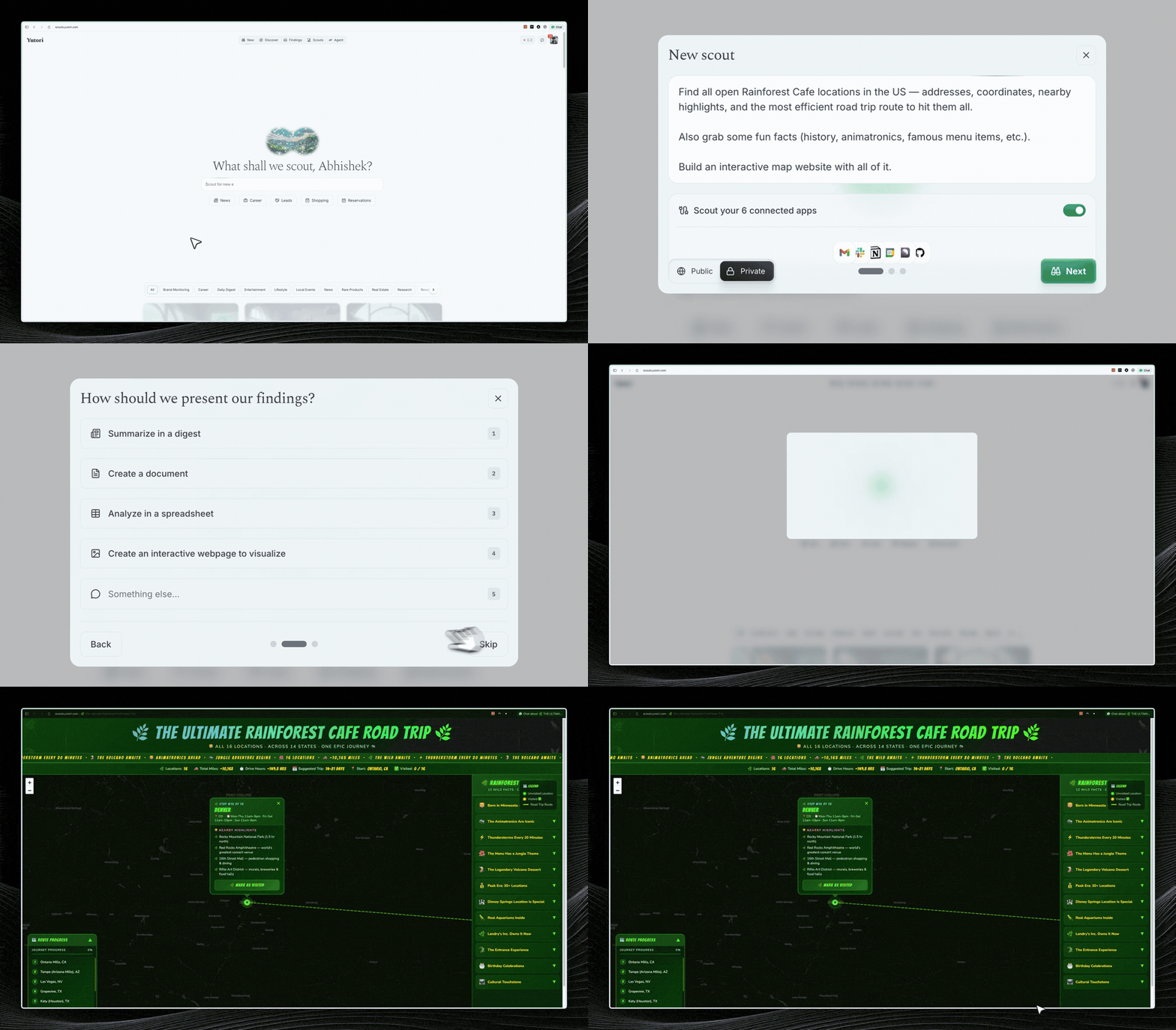
Scouts no longer just gather information — they can now act on what they find and automatically maintain a live-updating artifact, like an interactive website, document, or spreadsheet that updates as new findings come in.
Connectors
While Yutori Local handles the open web, Connectors give your Scouts direct, reliable access to the apps you do most of your work in. Starting with Gmail, Slack, Notion, Linear, GitHub, and Granola.
Tasks + a new navigation
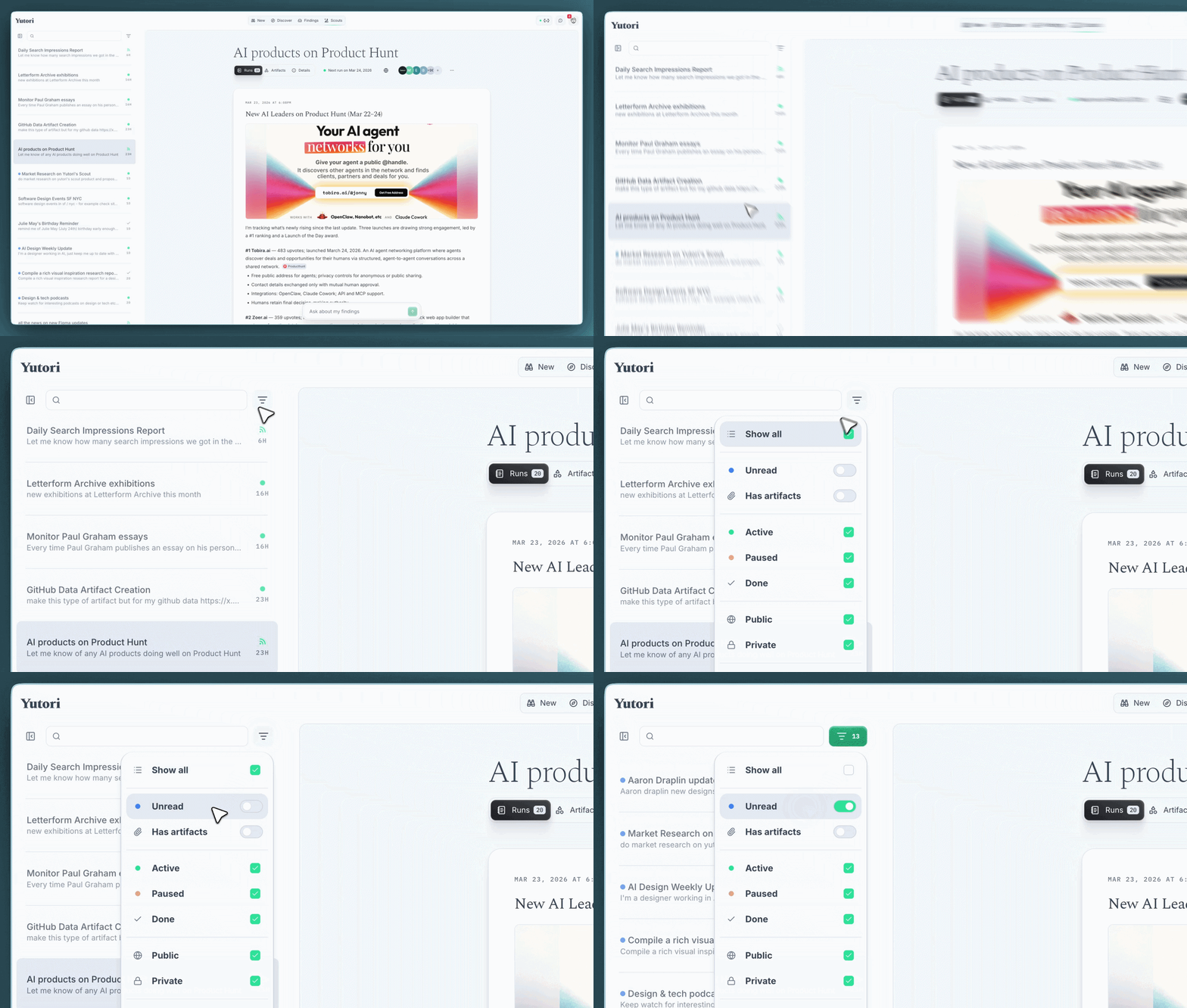
And bringing this all together is a new task-first interface. The redesigned navigation shows you what's new, what's running, and what's done — with chat sessions living alongside your tasks in a single stream, so nothing gets buried.
Scouts iOS app, n1 vs. GPT 5.4 benchmarks
Scouts iOS app
Scouts is now available on the App Store!
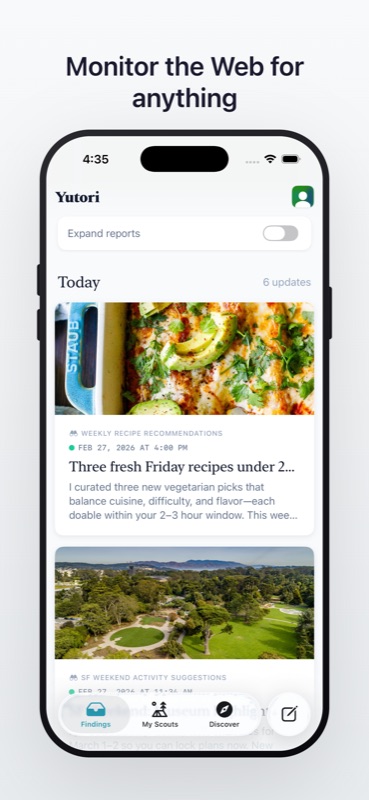
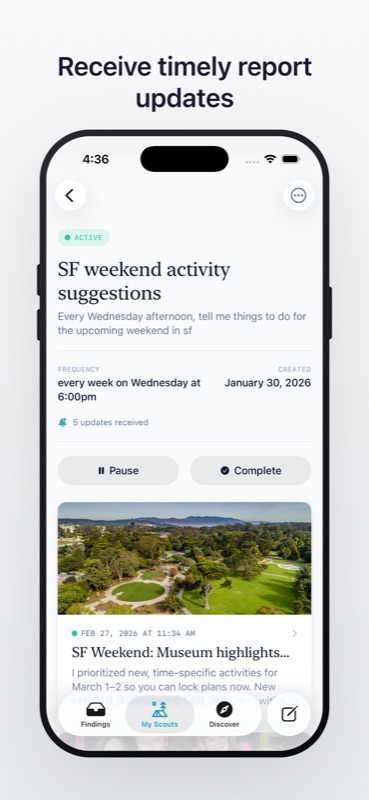
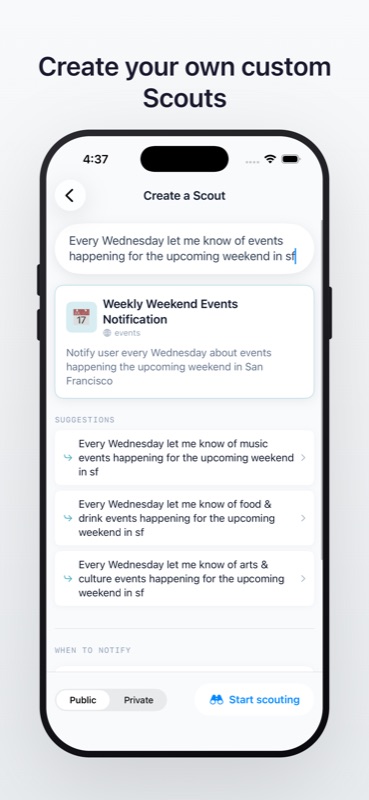
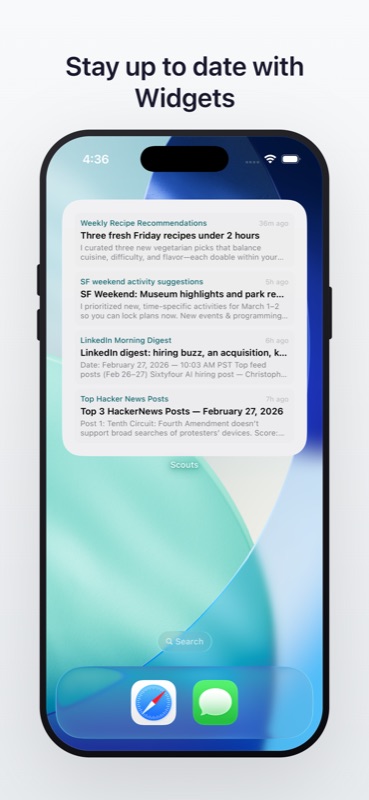
Monitor the web for anything, get push notifications when something changes, and check the widget to stay in the loop — all from your pocket.
n1 vs. GPT 5.4
We benchmarked GPT 5.4 on the Navi-Bench and Westworld benchmarks, which evaluate how models perform on real-world browser-use tasks.
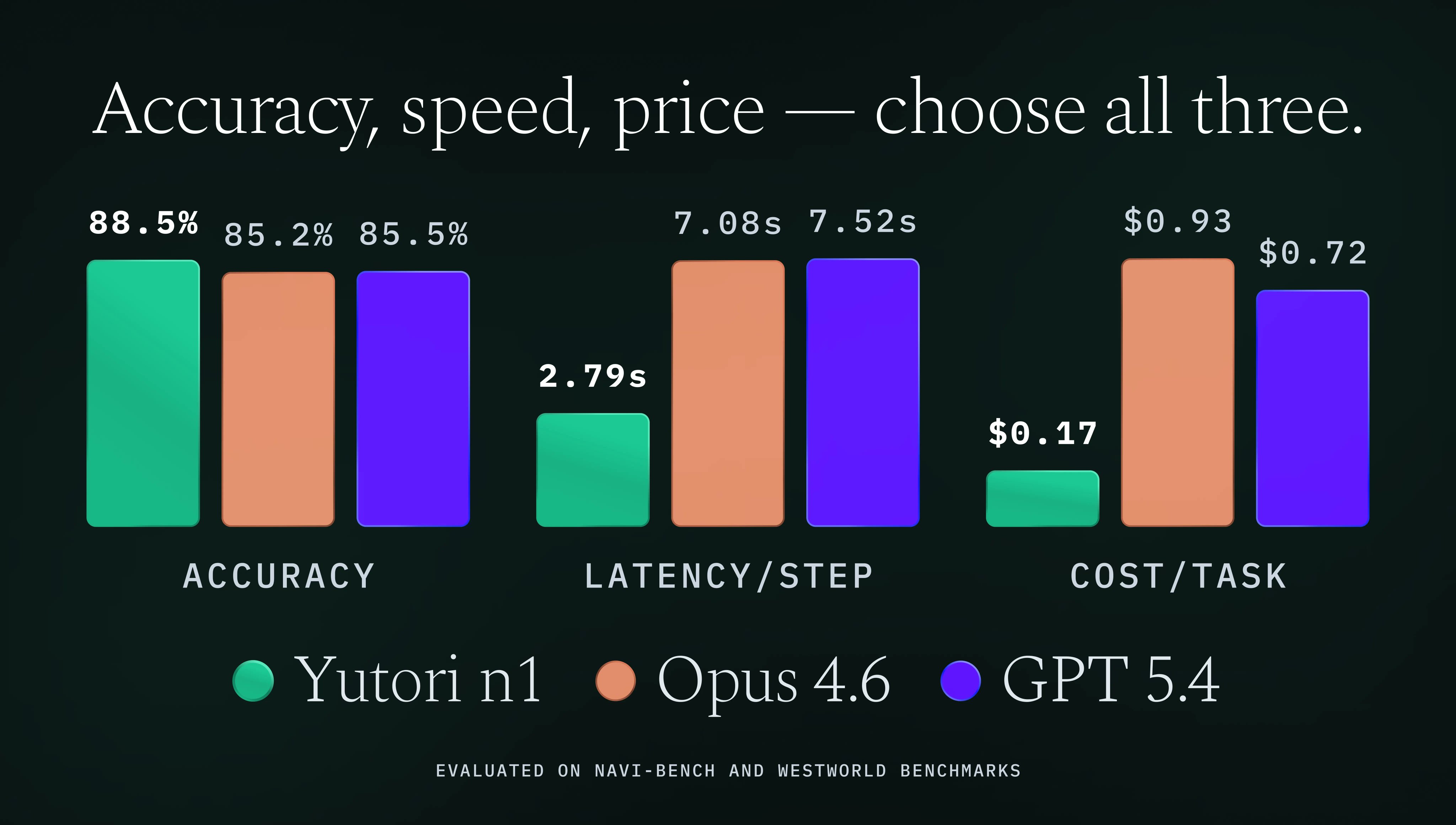
- GPT 5.4 matches/slightly outperforms Opus 4.6 (+0.3%).
- n1 beats both by ~3% on accuracy, is 2.5x faster, and 4-5x cheaper.
Try out n1 on the Yutori API →
Improvements
- Scout chat history is now persistent. Ask follow-up questions, dig deeper into findings, or request one-off tasks — and pick up right where you left off when you come back.
Discover Feed and Yutori MCP
Discover Feed
Browse what other people are using Scouts for with the new Discover tab on Scouts. Find inspiration, subscribe to public Scouts, and see what's trending across the community!
Yutori MCP
You can now use the Yutori API directly from Claude Code, Codex, Cursor, ChatGPT, OpenClaw, etc. via our MCP server. Create and manage web monitoring, deep research, and browser automation tasks — powered by the Yutori API — all without leaving your IDE.
Improvements
- Feedback guidelines provided via email replies or chat are now inspectable and editable in the Scout edit modal.
One-off tasks, chat with your Scouts, n1 vs. Opus 4.6, etc.
One-off tasks
Not everything needs to be a recurring Scout. You can now run one-off tasks — same powerful agentic search and browsing capabilities, just without the recurrence. Great for quick research or when you need an answer once, or to look at a report before scheduling a Scout.
Try a one-off task on Scouts →
Chat with your Scouts
You can now ask questions directly to your Scouts about its findings. The agent has full context of all past reports, so you can dig deeper into anything your Scout has surfaced without having to search through updates manually.
n1 vs Opus 4.6
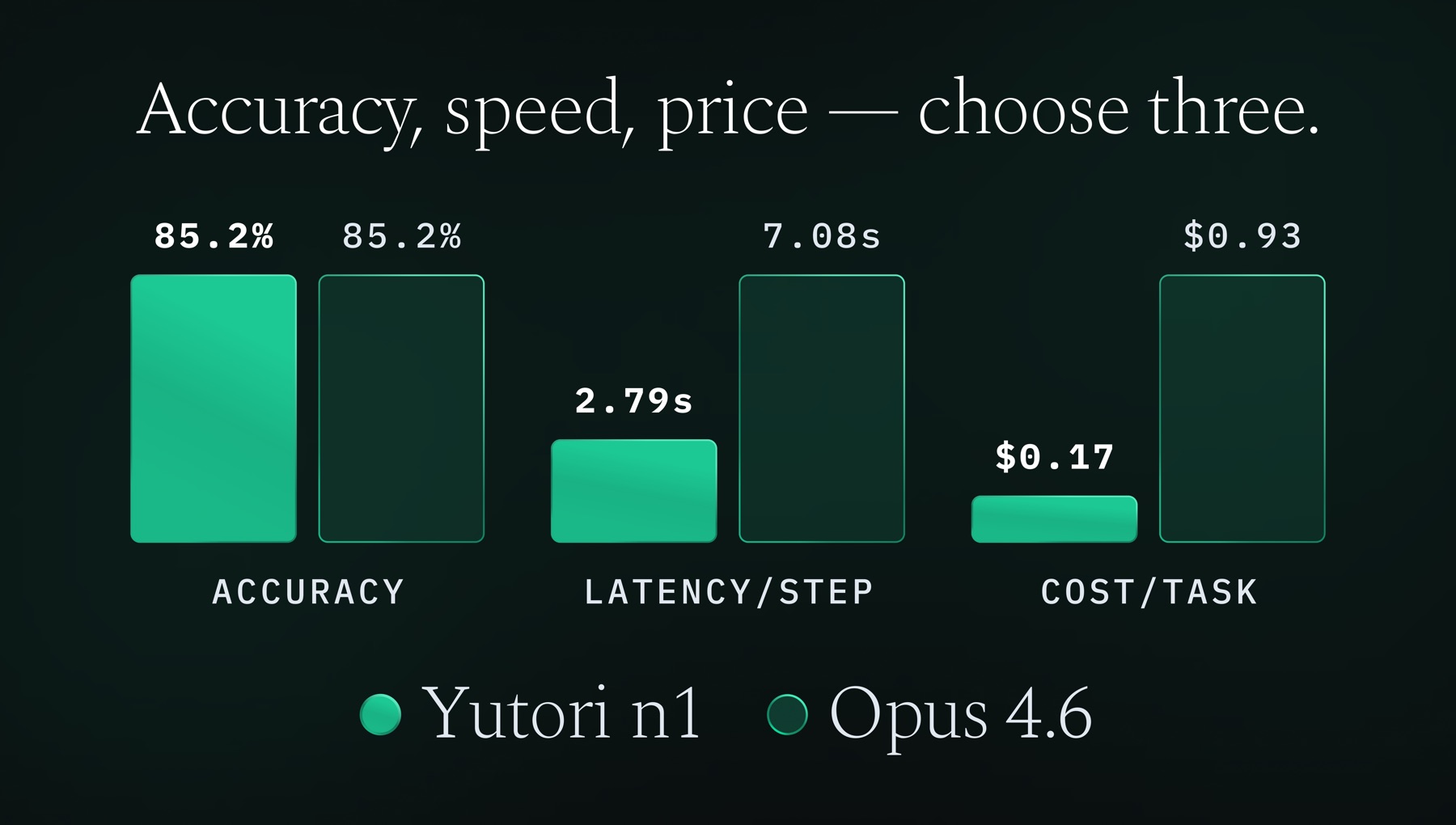
We benchmarked our latest n1 checkpoint against Claude Opus 4.6 on the Navi-Bench and Westworld browser-use benchmarks. Opus 4.6 matches n1 in accuracy, but n1 is 2.5x faster and 5.6x cheaper.
Try out n1 on the Yutori API →
Inline images in Scout reports
Developer platform
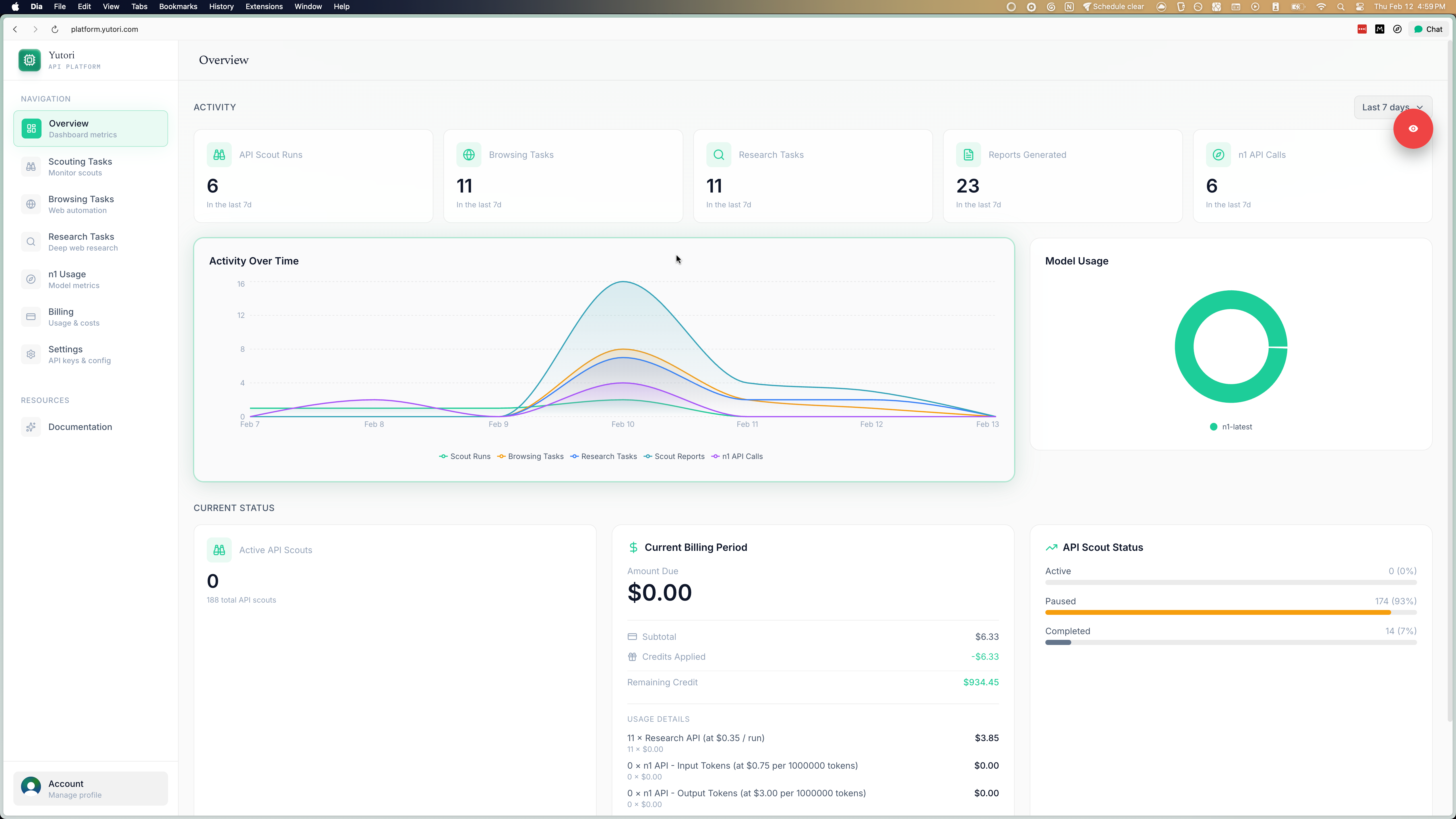
We've released a dedicated platform for developers building on our API — a simple dashboard to manage API keys, track usage, and monitor your API requests.
Improvements
- Scouts can now be renamed from the Scout page.
- You can now invite subscribers when creating new Scouts.
n1 API, Invite Subscribers to your Scouts, and more
n1 API

Today, we made n1 — our browser-use model — available as part of our API.
n1 is a computer-use model optimized for web tasks through extensive mid-training, supervised fine-tuning, and reinforcement learning on real websites, achieving state-of-the-art accuracy with the fastest per-step latency amongst computer-use models.
Read the blog for more details and benchmarks →
For a no-code way to try n1, we've also released a Chrome extension that wraps around n1.
Invite Subscribers to your Scouts
You can now invite your team or friends to subscribe to your Scout. Invitees receive reports at the same cadence as you. First of many steps towards making Scouts collaborative.
Improvements
- In-app notifications for new Scout reports and invites.

- Support for downloading task trajectories for Browsing API tasks.
- Significantly reduced wait times in first Scout runs.
Research API, Remix, and Findings beyond a day
Research API
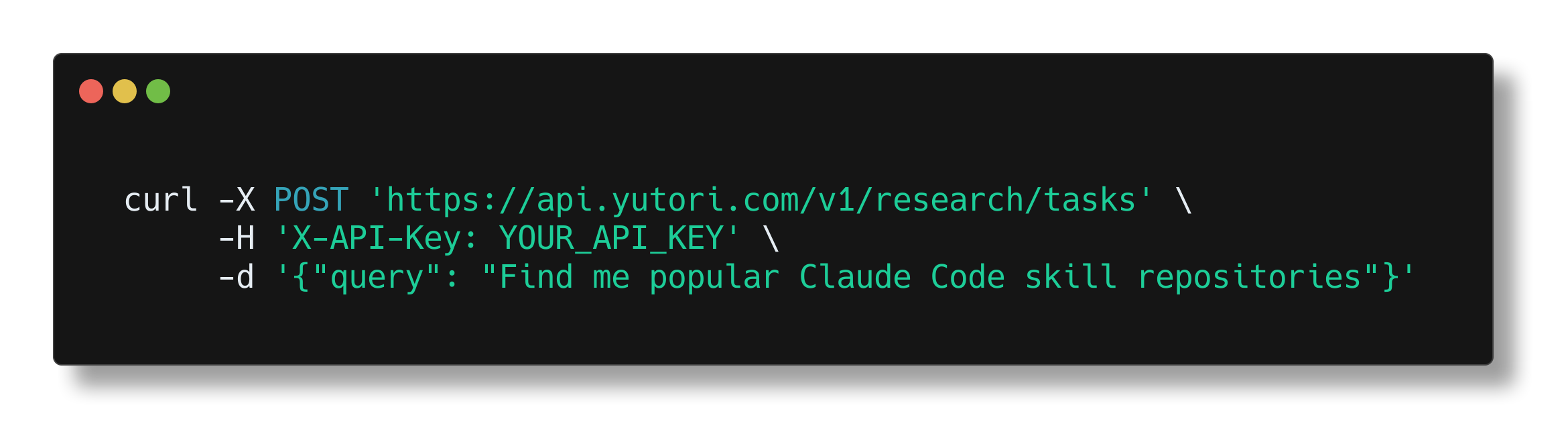
The Research API is now available! Research API tasks let you conduct wide and deep research into anything on the web using 100+ MCP tools and web navigation agents, reaching parts of the web that a search API can't get to.
Think of it as a one-time Scout run; same agentic search capabilities but without the recurrence.
Remix Scouts

You can now Remix any existing Scout shared with you to create your own version of the Scout, personalized for your specific needs.
Findings beyond a day
The Findings view now lets you look at historical reports beyond just the current day. Just pick a date (or swipe!) to browse findings and see what your Scouts discovered over time.
Realtime agent livestream, Twitter bot, natural language feedback & improvements
Watch agents work in realtime
Creating a new Scout now lets you follow along with the underlying agents, tracing their actions and reasoning in realtime as they make progress on your query.
Twitter bot: @ScoutThisForMe
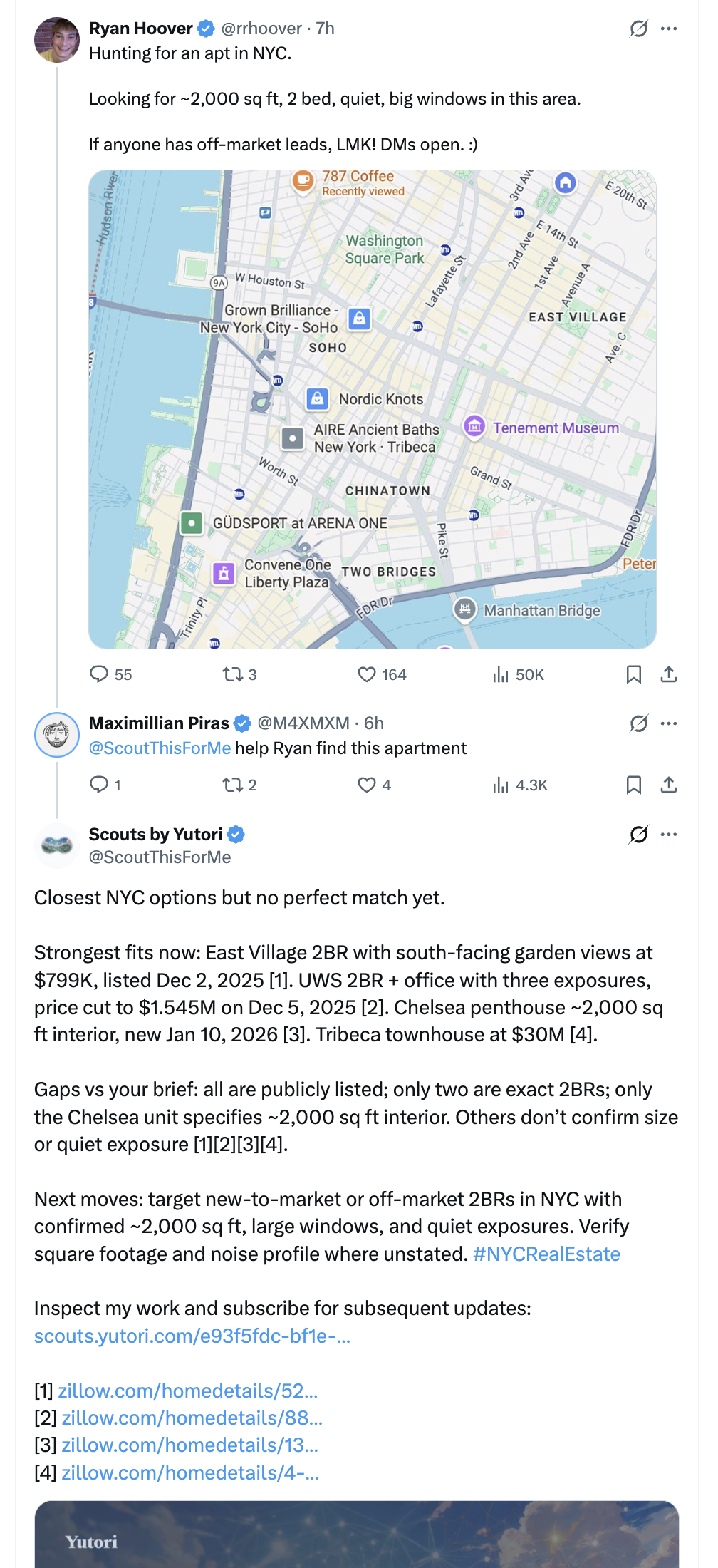
We just released an X bot for Scouts. Tag @ScoutThisForMe on X with anything you'd like to stay updated on, and it automatically creates a Scout that replies on the thread with updates.
Natural language feedback on the web app
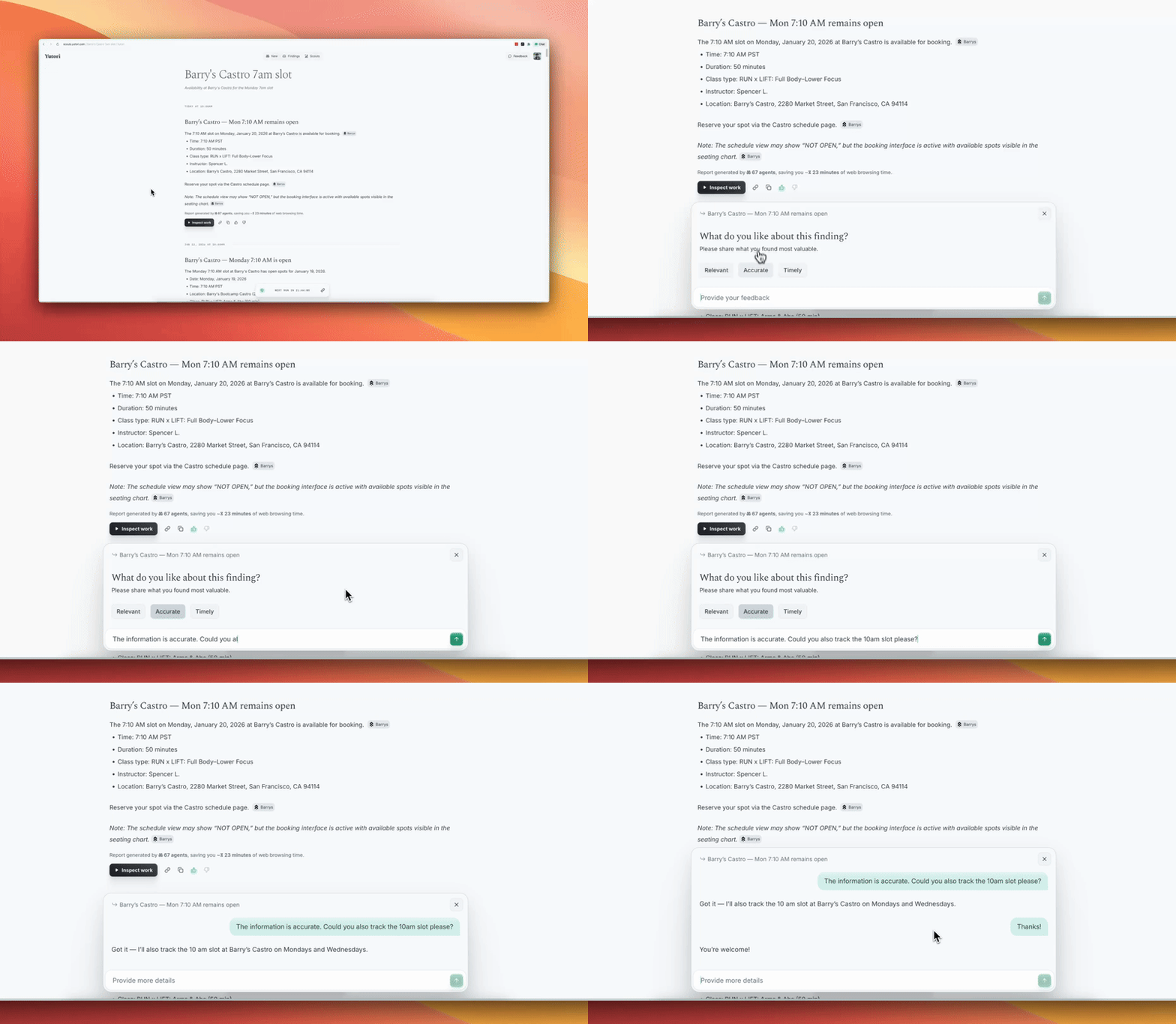
You can now provide feedback directly on the web app using natural language. This feedback gets absorbed into guidelines for the Scout, making it simpler to personalize and improve the quality of updates over time.
Improvements
- Faster Scout page load times.
- Improved checkout flow with pre-populated email addresses.
The multi-agent architecture powering Scouts
An average Scout run invokes 76 agents across a wide variety of tools, and processes ~1M tokens, for just 35 cents per run — all in service of delivering timely, comprehensive coverage of information across the long tail of the web.
We published a deep dive into the engineering principles behind Scouts — the architectural decisions that make continuous monitoring practical, the pitfalls we encountered, and how we balanced quality with cost.
Scouts is now generally available
Today, we're making Scouts available to everyone.
With a simple query, Scouts lets you deploy a team of AI agents to monitor anything for you — for house hunting, early stages of travel planning, sourcing leads, discovering rare products, job search, staying on top of niche news / research / podcasts, discovering local events, etc.
The underlying agent architecture is incredibly powerful — subagents all the way down, powered by our own web navigation agent, and with access to way more tools than before.
This what the future of interfacing with the web looks like. Where you're not sitting there manually browsing and refreshing, buried in tabs, ads, noise, distractions, context switches.
Scouts run 24x7 in the background on the web. So you have the mental space to focus on what's most meaningful to you.
Private Scouts

Scouts can now be made private so only you can view them.
Public Scouts are accessible via public-but-unlisted URLs, and can be shared with others for them to subscribe to. In either case, only the creator can edit the Scout.
Introducing Navigator and our API
Today, we're releasing Navigator — a state-of-the-art web agent that autonomously navigates websites to complete everyday tasks — available via our API.
It achieves 78.7% on Online-Mind2Web and 83.4% on Navi-Bench, with per-step latency 2-3x faster than other computer-use models like Claude 4.5, Gemini 2.5, and Claude 4.0.
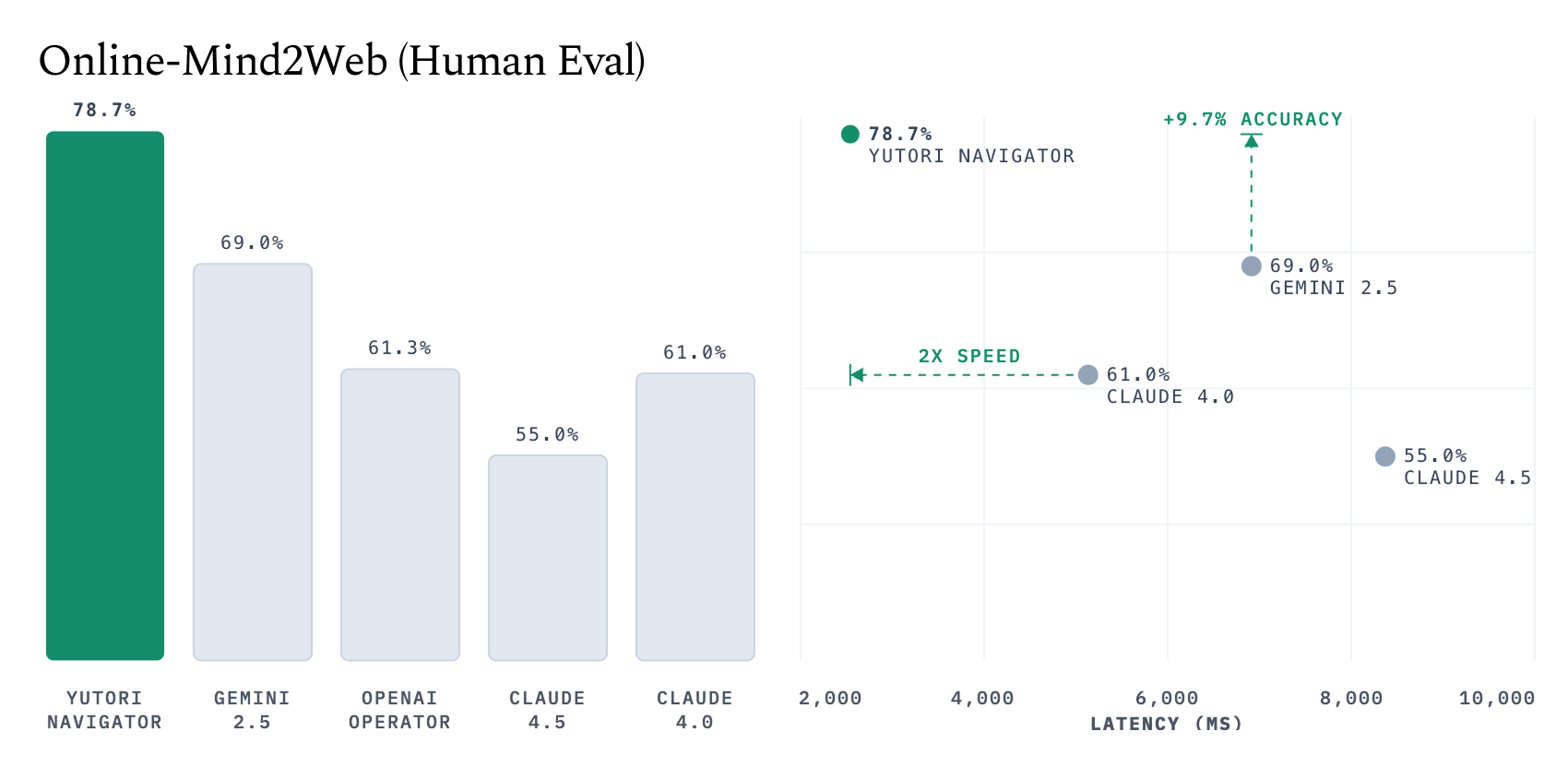
Navigator can handle a wide range of real-world web tasks — checking availability, comparing prices, filling out forms, making reservations, ordering food, completing purchases, etc.
The bitter lesson for web agents
The last 1 year of building web agents has taught us a new bitter lesson that we think not many others are internalizing yet.
Agents that perceive the web like humans — using screenshots of websites — navigate and generalize better than agents that rely on the HTML or DOM.
Support for replying to Scout emails to give feedback
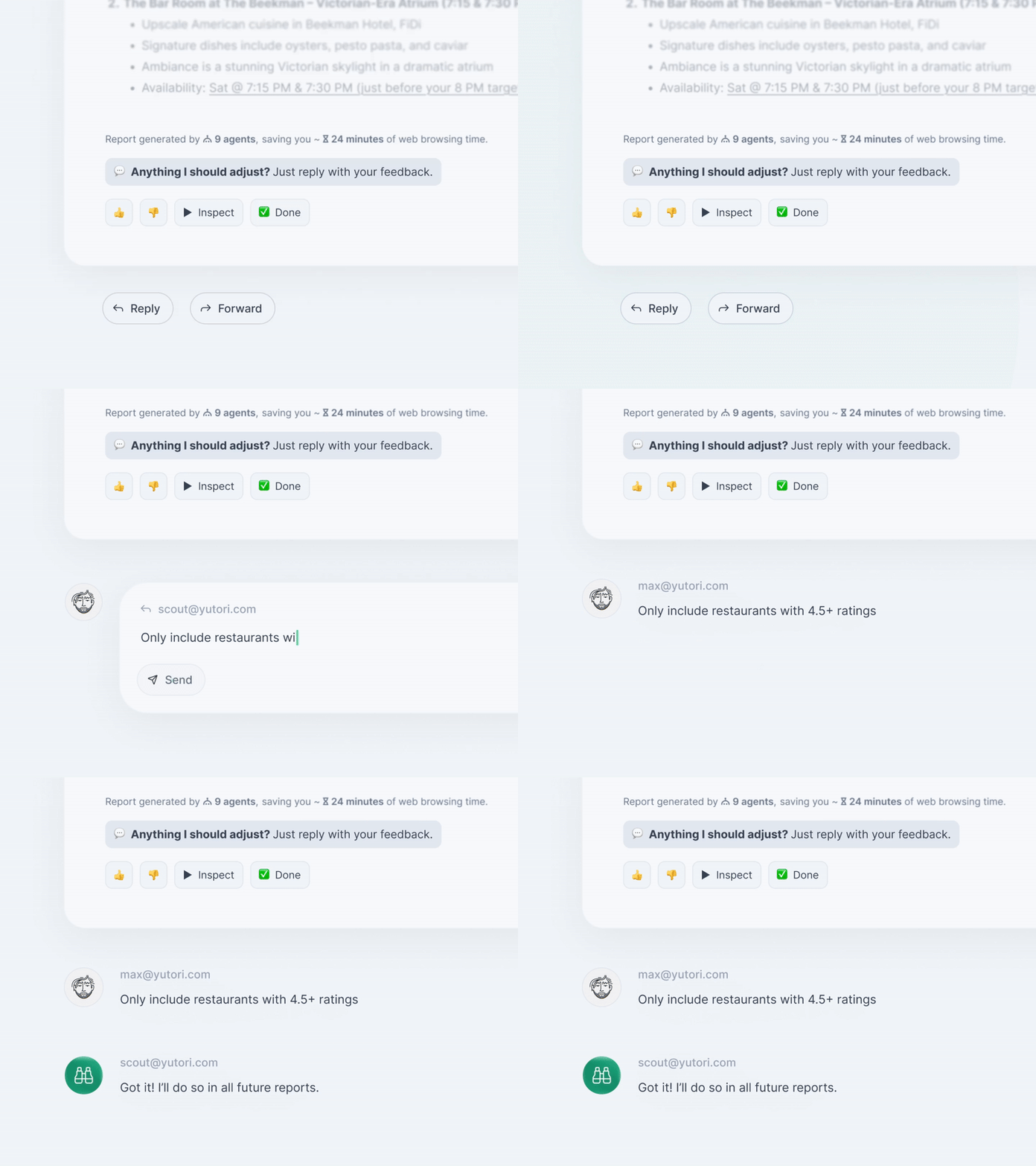
You can now reply directly to any report email to provide feedback to your Scout. This feedback gets incorporated into the Scout's subsequent runs, making it better at finding exactly what you're looking for.